Hurricane, Wildfire, and Severe Weather Planning: Where Volunteers Fit in Your Response Plan
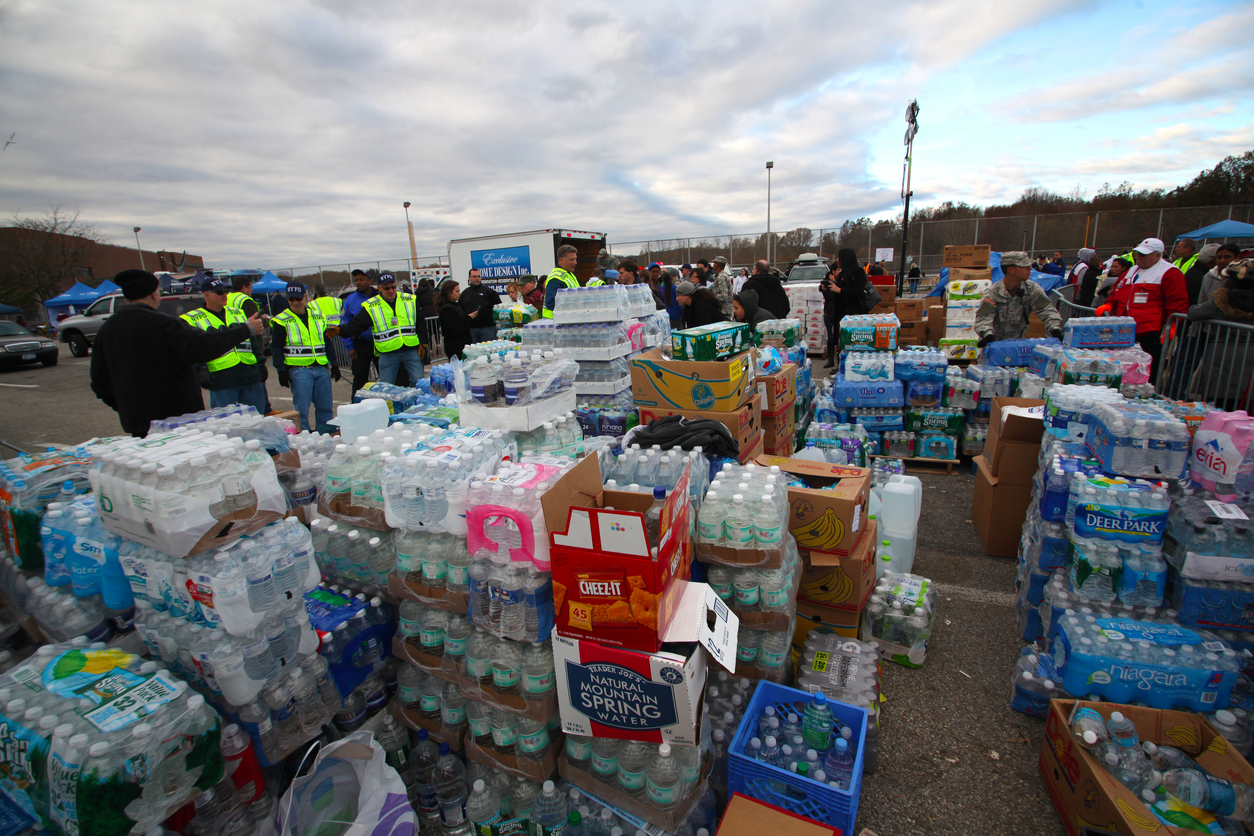
Disaster season arrives on a schedule. Hurricane season runs from June through November. Wildfire risk peaks in late summer and fall across much of the country. Every year, the window to prepare opens — and closes — whether your organization is ready or not. The volunteers who power your programs are often among the first to mobilize after a storm or fire, yet many nonprofits still treat them as an afterthought in their emergency plans. Volunteers show up without defined roles, unsure whom to contact or what conditions would prevent them from responding at all.
How should your organization incorporate volunteers into its disaster response and severe weather planning? Building that answer into your nonprofit risk-management strategy — before the season peaks — is what separates organizations that respond effectively from those that improvise under pressure.
Why Volunteers Are the Overlooked Variable in Most Disaster Plans
Most organizational disaster plans focus on staff continuity, data backup, and facility protocols. Volunteers, who may represent the majority of an organization’s active workforce during a crisis, rarely appear in those documents with defined roles or clear assignments.
The result is improvisation — and improvisation compounds every other challenge a disaster creates. Consider a nonprofit running a meal delivery program during a hurricane evacuation. Volunteers drive unfamiliar routes in deteriorating conditions, unsure whether to continue, whom to call if their vehicle is damaged, or what they are authorized to do. That scenario creates exposure for the volunteer, the client, and the organization simultaneously.
The improvisation risk extends beyond your own roster. FEMA explicitly warns that showing up in a disaster area without coordinating through a trusted organization can make it harder for professional responders and put volunteers at risk. Your volunteers should never be in the position of self-determining whether and how to respond.
How Do You Build Volunteer Roles Into Your Severe Weather Response Plan?
Pre-season preparation is the only kind that actually works. Once a storm is 48 hours out, the planning window is closed.
Before disaster season begins, work through these steps:
- Define appropriate roles — and rule out inappropriate ones. Not every volunteer assignment belongs in a crisis environment. Roles involving the operation of a personal vehicle, entry into potentially damaged structures, or close contact with vulnerable populations carry an elevated risk that requires explicit authorization, training, and coverage. Decide in advance which roles activate during a disaster and which do not.
- Establish a communication chain. Volunteers need to know exactly whom to contact before, during, and after a weather event — and what to do if that person is unreachable. A communication tree with backup contacts is not optional; it’s the difference between coordinated response and chaos.
- Conduct scenario-specific training before the season opens. Volunteers who have practiced a response before a crisis hold up better under pressure than those encountering the scenario for the first time. Ready.gov’s Community Emergency Response Team (CERT) program trains volunteers in basic disaster response skills — fire safety, light search and rescue, and disaster medical operations — and offers a consistent nationwide model that nonprofits can reference when building their own preparedness training. Many of these programs provide accident insurance for their volunteers through the VIS program.
- Create a go/no-go decision framework. Volunteers should never decide for themselves whether conditions are safe enough to respond. Leadership should define and communicate clear activation and suspension criteria before the season starts.
- Document everything in advance. Pre-season sign-offs on updated role descriptions, emergency contacts, and vehicle use agreements reduce ambiguity and create a defensible record in the event of a liability claim.
What Liability Risks Do Volunteers Face During Disaster Response?
Disaster deployments don’t create new categories of risk — they intensify the ones that already exist.
Driving is among the most significant. Volunteers who transport supplies, evacuees, or other personnel in personal vehicles during a hurricane or wildfire operate in conditions that sharply increase the risk of accidents. A volunteer’s personal auto policy is the primary coverage in those situations, but policy limits may be insufficient for a serious accident. Volunteer excess automobile liability insurance, available through VIS, provides a layer of protection above the volunteer’s personal policy — a gap that standard organizational coverage typically doesn’t address.
Physical injury risk also rises during disaster response. Lifting and carrying in debris fields, working around damaged structures, operating tools and equipment, and navigating unstable ground all create conditions that can lead to volunteer injury. Volunteers are not employees. Therefore, workers’ compensation may not apply to them. VIS’s volunteer accident medical insurance fills that gap, covering medical expenses incurred during an authorized deployment.
Liability for volunteer actions remains a concern throughout. If a volunteer accidentally injures a client or damages property during a disaster response, the organization can face a claim. Insuring volunteers separately from the organization’s primary liability policy, through VIS, protects the organization’s coverage limits from being shared with and potentially exhausted by volunteer-related claims.
One angle that often goes unconsidered: False accusations don’t stop during disasters. Volunteers assisting clients in their homes or providing one-on-one support during an emergency face the same accusations year-round — and those situations can be harder to document and defend when circumstances are chaotic, and recordkeeping has broken down.
FEMA’s network of Voluntary Agency Liaisons (VALs) exists specifically to connect nonprofits with official disaster response coordination structures. Organizations that engage with that network before a disaster have clearer roles, better communication pathways, and a stronger position if a post-event liability question arises.
Before the Next Storm, Review How Your Volunteers Fit In
Volunteers are among a nonprofit’s most valuable assets in a crisis, but only if they’ve been deliberately included in the response plan before the event. The window to plan is now — review volunteer role assignments, update your communication trees, confirm that training is current, and assess whether your volunteer insurance coverage accounts for the specific risks of disaster-season deployments.
VIS members have 24/7 access to the VIS Vault of risk management resources, including dozens of “Preventer Papers” addressing injury prevention and vehicle safety — practical tools for small-group training or for distributing to volunteers before the season begins. For details about the specialized volunteer insurance VIS offers, click the “VIS Is…” tab at the top of the page and scroll down to the FAQ section.
To explore coverage options and risk management resources through VIS, visit the member benefits page.
Disaster Response FAQ
Does workers’ compensation cover volunteers if they’re injured during disaster response?
Not necessarily. Volunteers are not employees, so standard workers’ compensation typically doesn’t apply. Volunteer accident medical insurance fills that gap.
Should volunteers be included in our organization’s general liability policy?
It’s not recommended. Doing so exposes your coverage limits to volunteers, which can leave the organization underinsured if both parties are involved in the same claim. Separate volunteer liability insurance protects your policy limits.
What if a volunteer uses their own vehicle during a disaster response and has an accident?
The volunteer’s personal auto policy is the primary coverage, but limits may not be sufficient for a serious accident. Volunteer excess automobile liability insurance provides an additional layer of protection above that policy.
What roles should volunteers not be assigned during disaster response?
Any role involving entry into damaged structures, operation of specialized equipment without training, or unsupervised contact with vulnerable clients warrants careful review. Determine in advance — in writing — which roles are appropriate for volunteers and which belong to trained staff or professional responders.
About the Author
William R. Henry, Jr. is Vice President and Director of Member Benefits at Volunteers Insurance Service Association, Inc. (VIS), where he leads membership development and delivers risk management solutions tailored to volunteer-based organizations nationwide. A recognized authority on volunteer risk management, he is a frequent speaker and author on best practices for safe and effective volunteer engagement. He is accredited by the International Association of Business Communicators. With a background in communications, journalism, and public affairs, Henry brings a strategic perspective to supporting nonprofit organizations across the United States.
About VIS
Volunteers Insurance Service Association, Inc. (VIS) is a membership organization serving more than 3,500 volunteer-based nonprofit organizations and public entities nationwide. VIS is the only association that offers these three insurance programs designed specifically for volunteers: volunteer accident, volunteer liability, and volunteer excess automobile liability.
If you are interested in protecting your volunteers through the unique VIS insurance program, please click on the “Get volunteer insurance now” link on the home page, or call 800.222.8920. For more information on VIS’s risk-management resources for members and our vendor partners, click on the “Member Benefits” tab.